
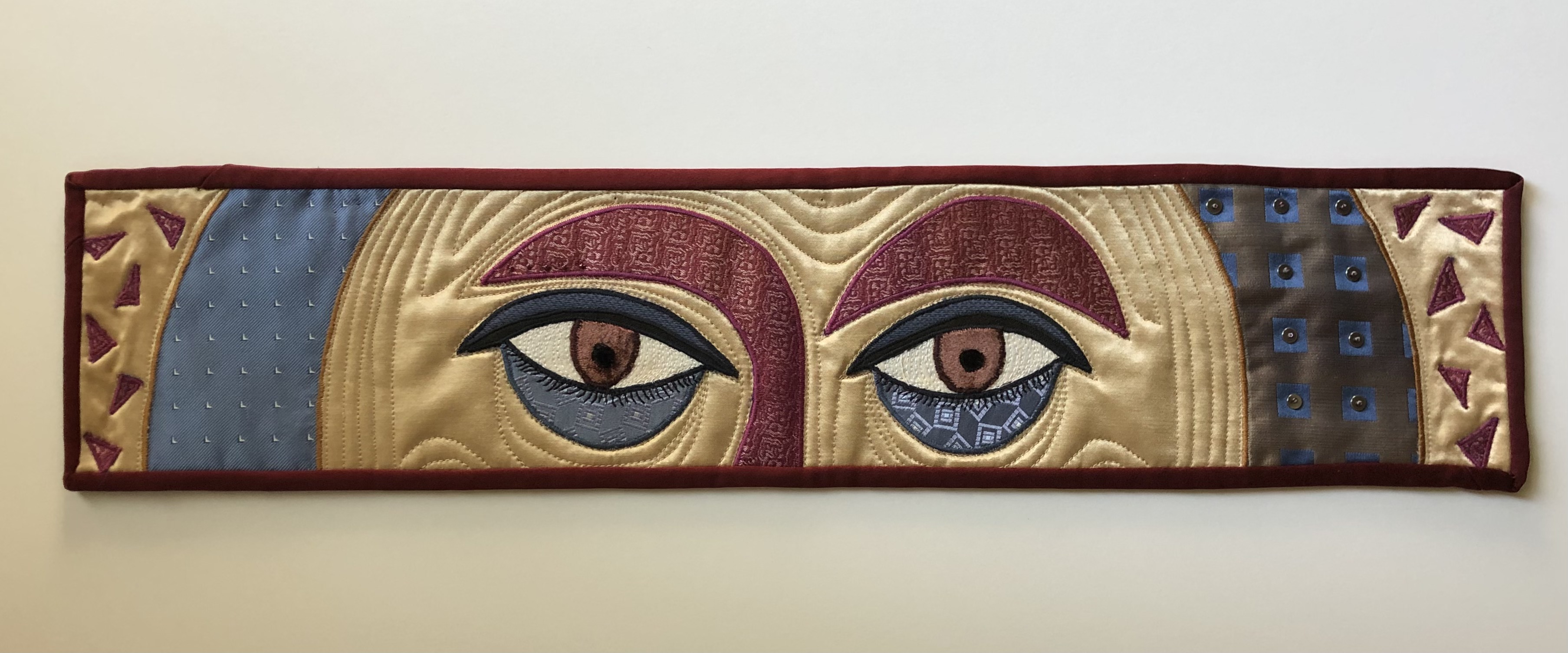
Look what just arrived in the mail! It’s the little silk quilt I made in 2019. It’s been traveling all this time as part of a quilt show called, Eye Contact, sponsored by Sacred Threads.
Look what just arrived in the mail! It’s the little silk quilt I made in 2019. It’s been traveling all this time as part of a quilt show called, Eye Contact, sponsored by Sacred Threads.
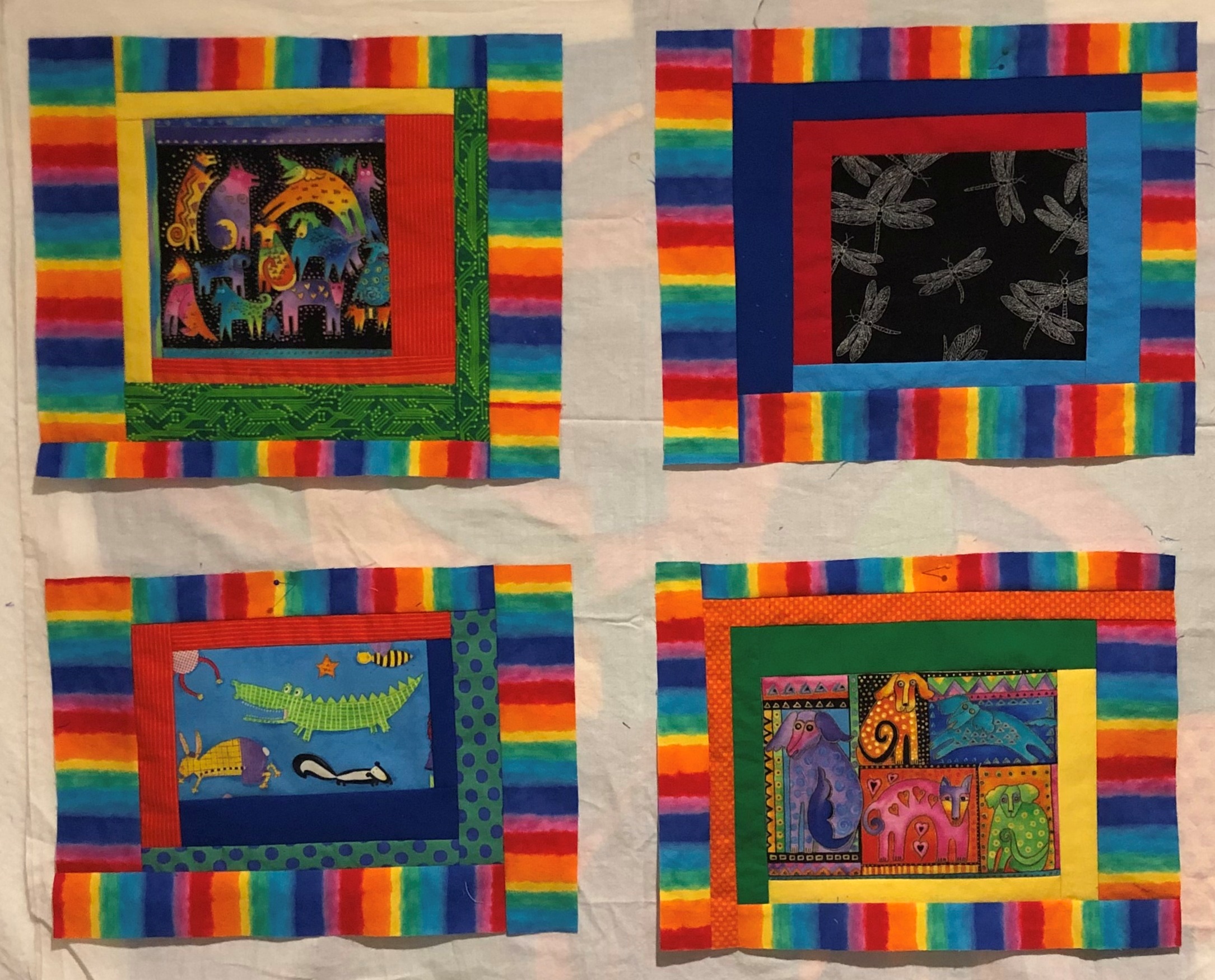
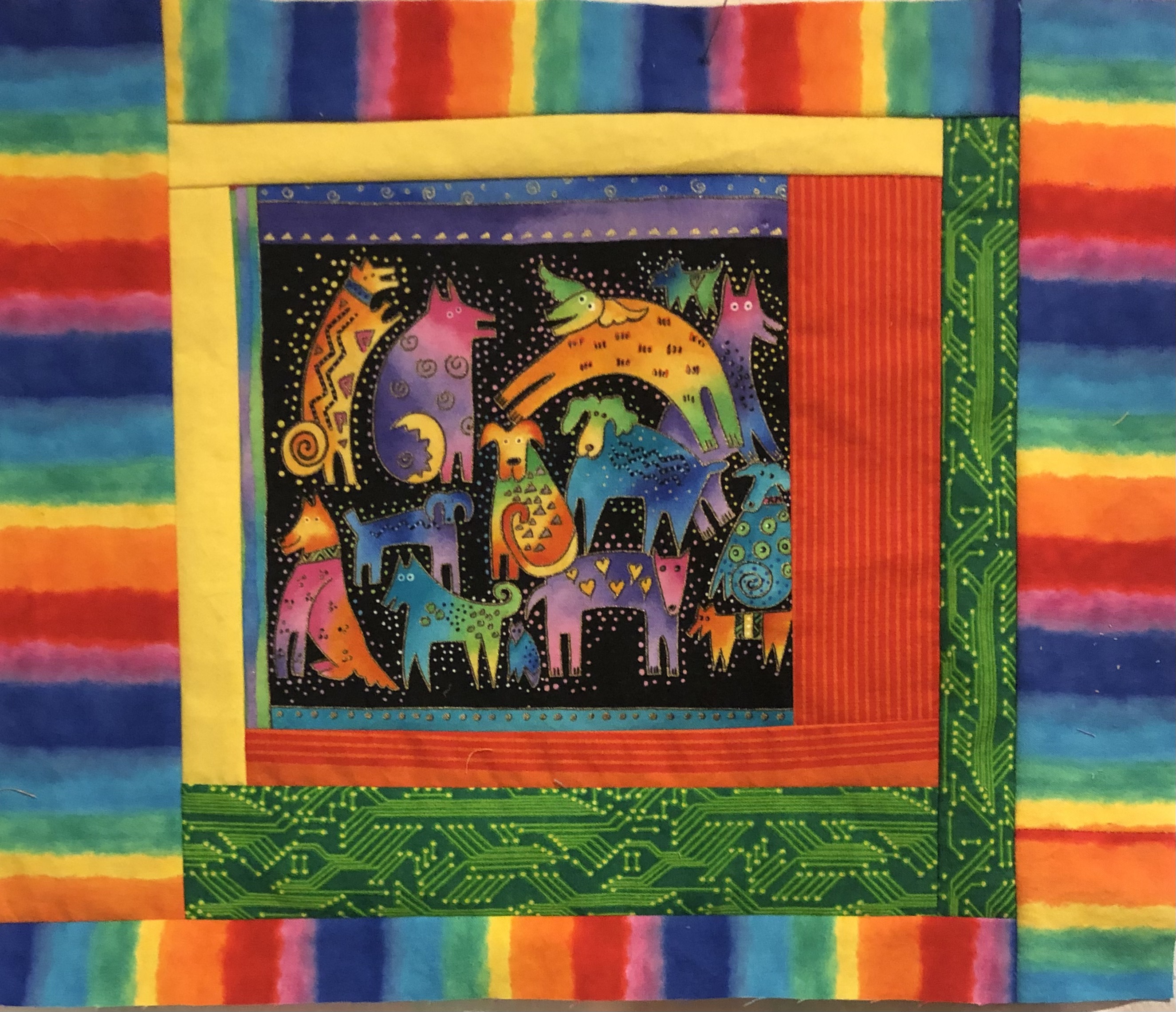
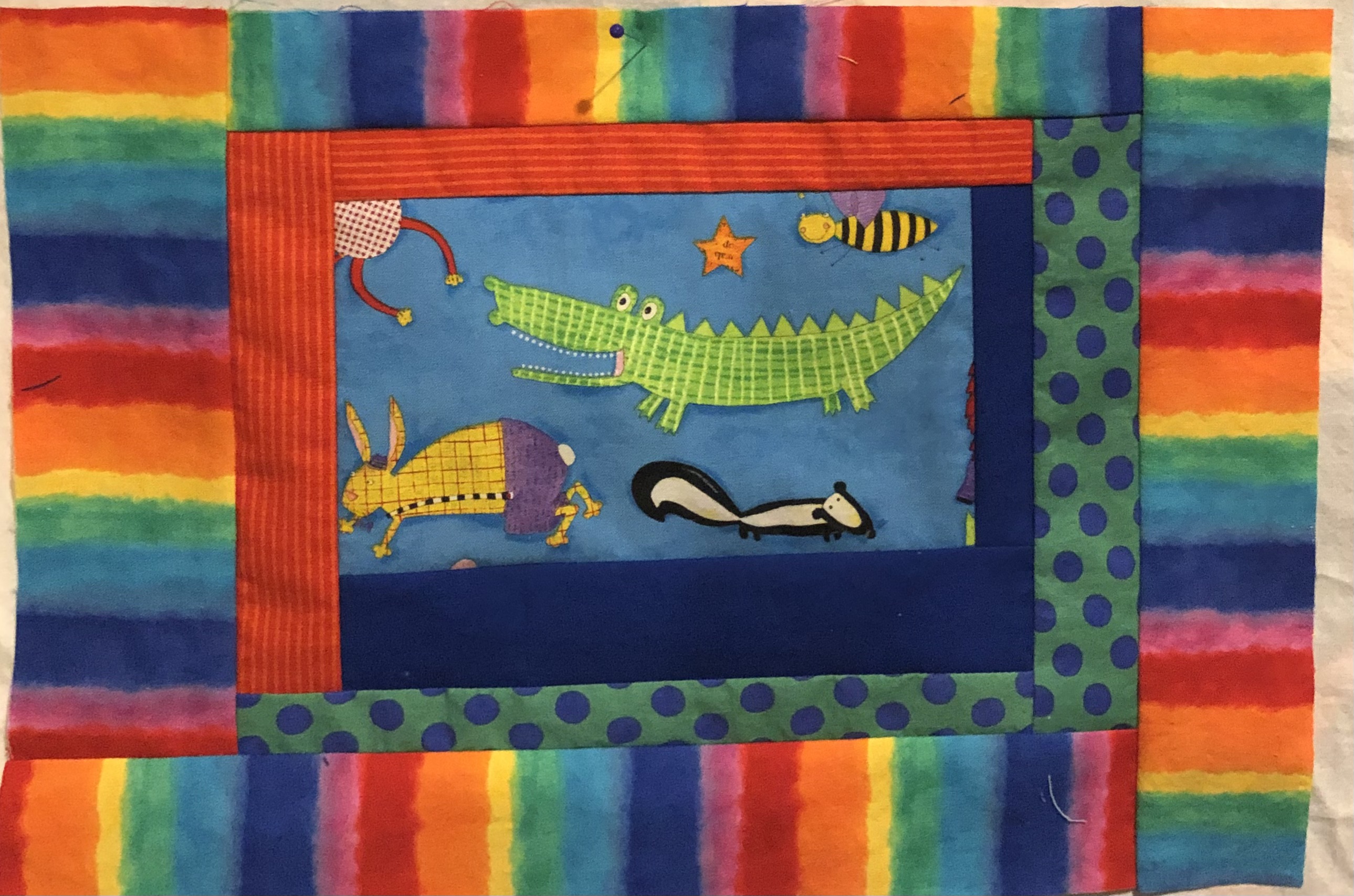
I’m working on a baby quilt for a cousin who’s already been born. This quilt has dogs, an alligator, and dragonflies. If I’d had any armadillo fabric, I would have used it! I hear that baby Regina has armadillo stuffies.
Here are two closeups:
Now that the 6th and last Chunk of the Month has been revealed, I’ve been playing with layout possibilities. Here are eight of them. I’m sure there are more!
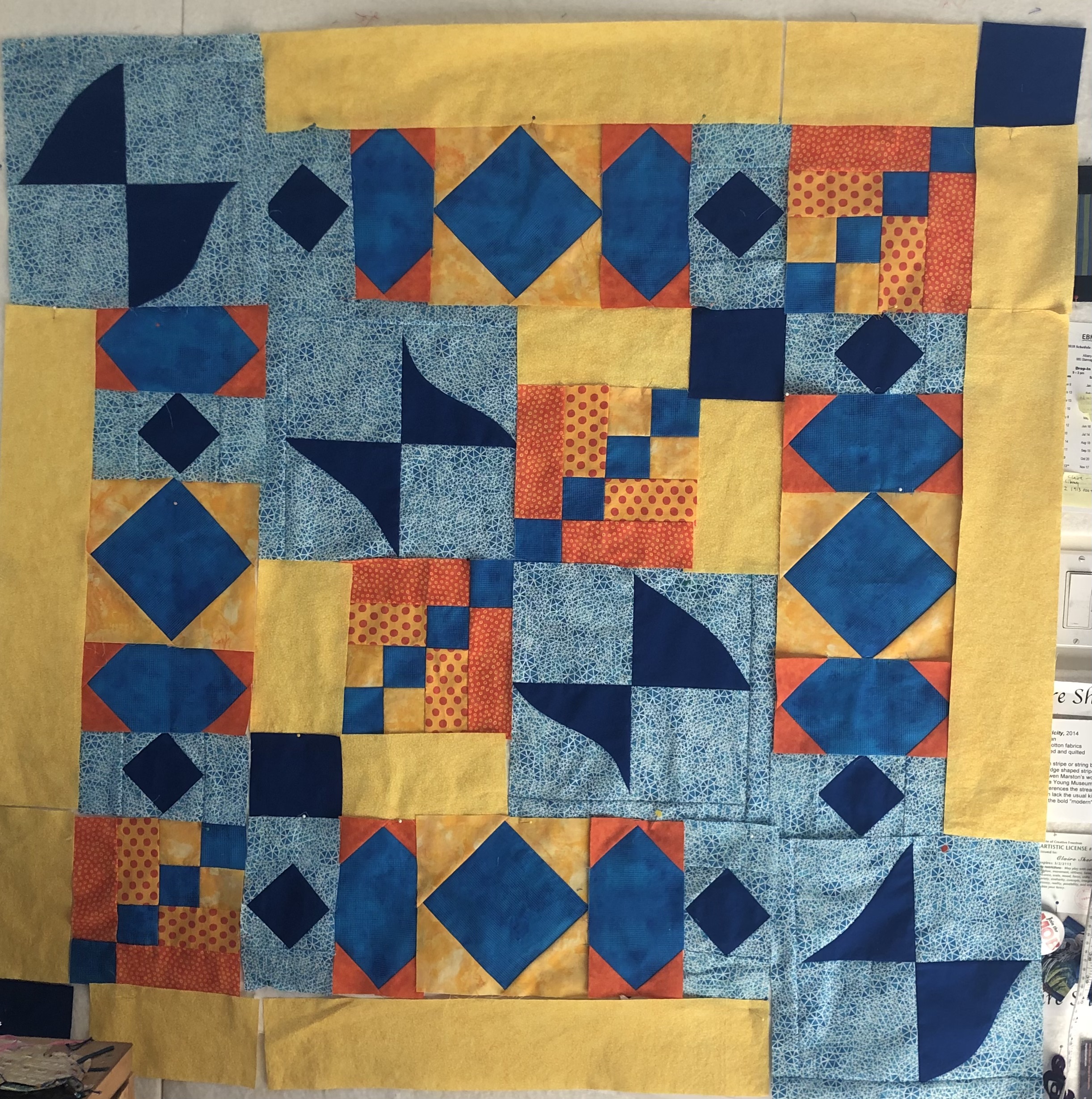
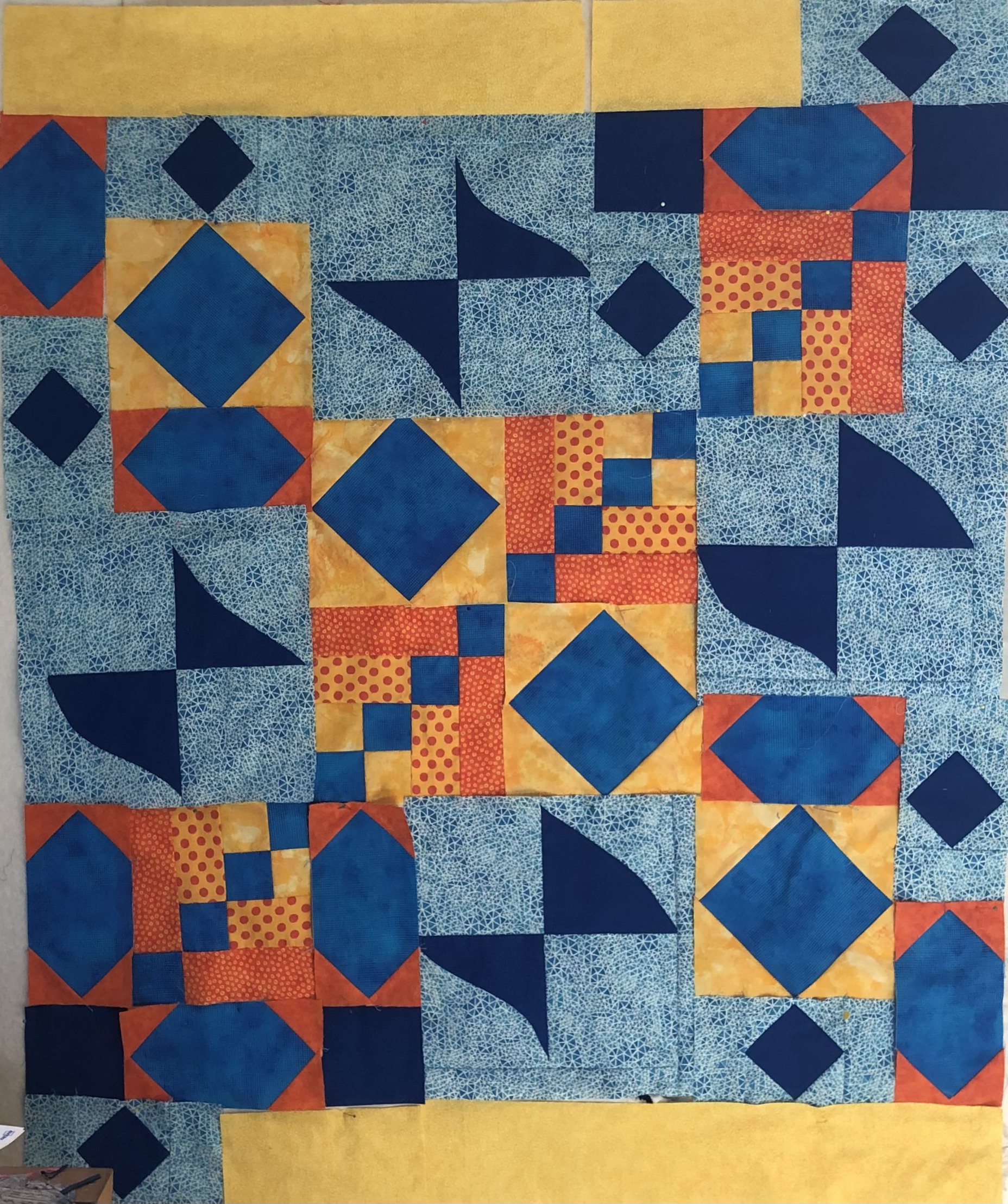
Doesn’t use 2 long sashing and 6 short sashing pieces, and isn’t quite symmetrical.

Uses all sashing but they are a little short. Would need to cut 2 morel small pieces of sashing.
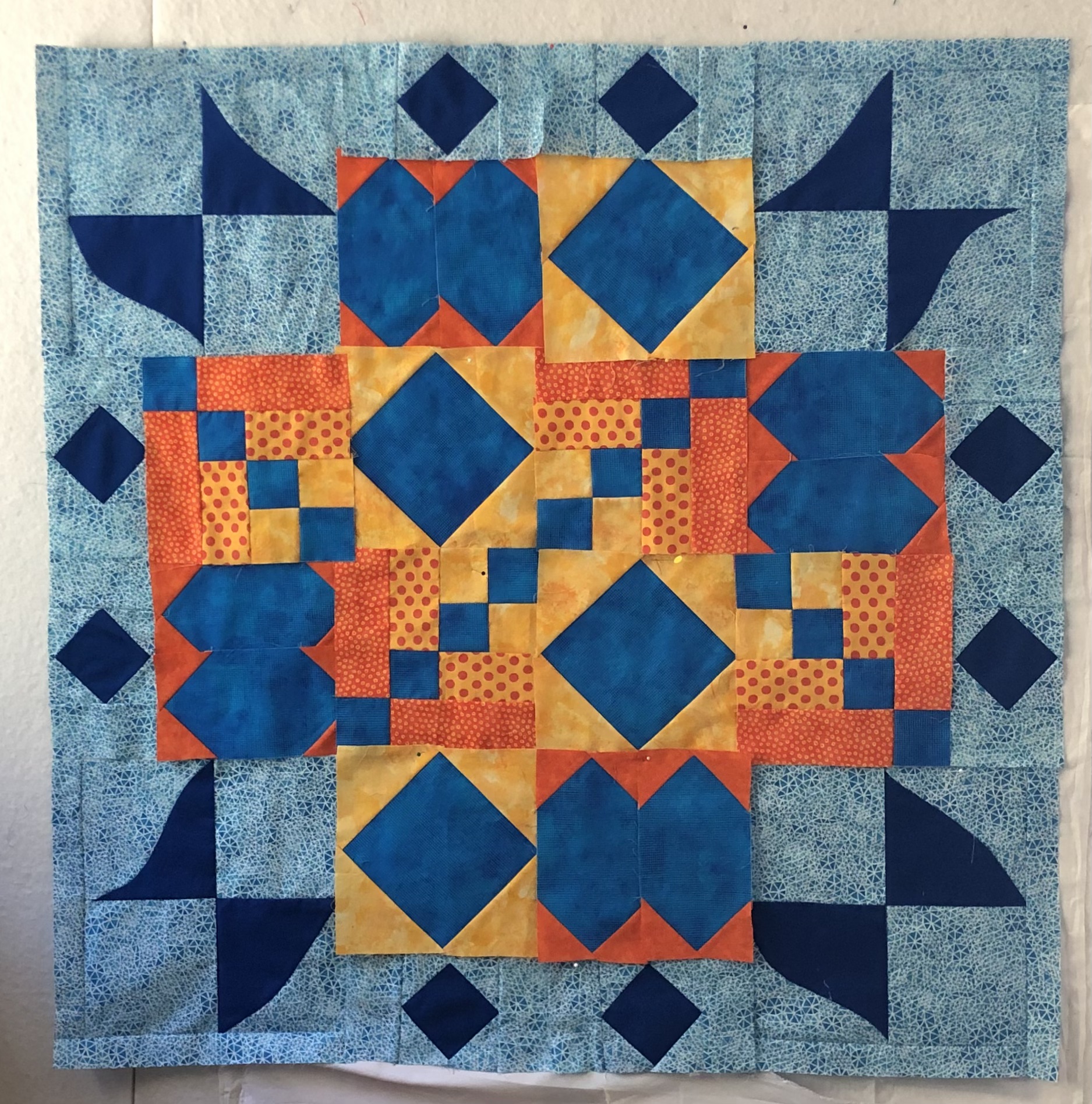
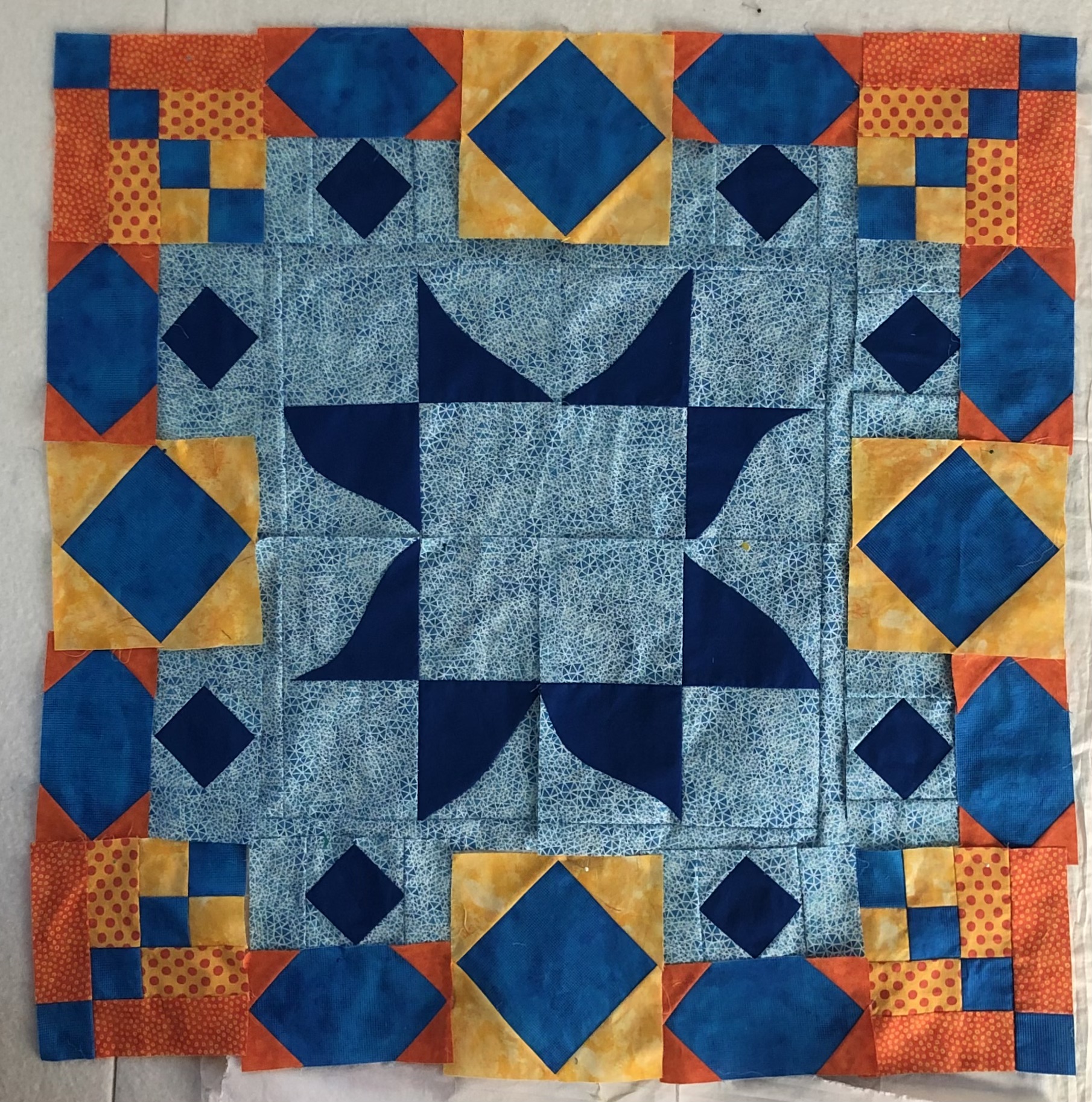
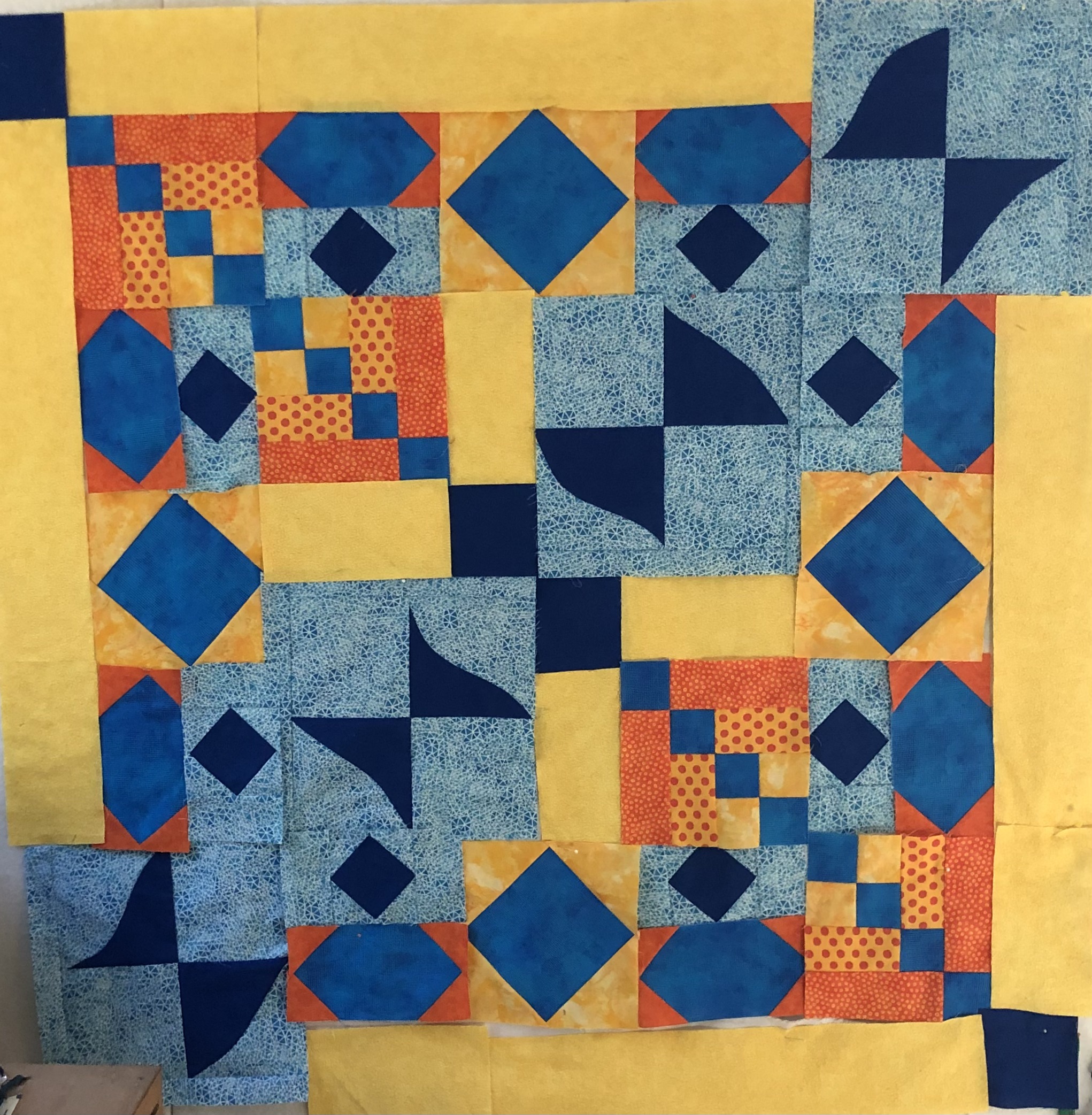

I really like this last one, but i’m going to keep arranging them to see if i find something i like better.
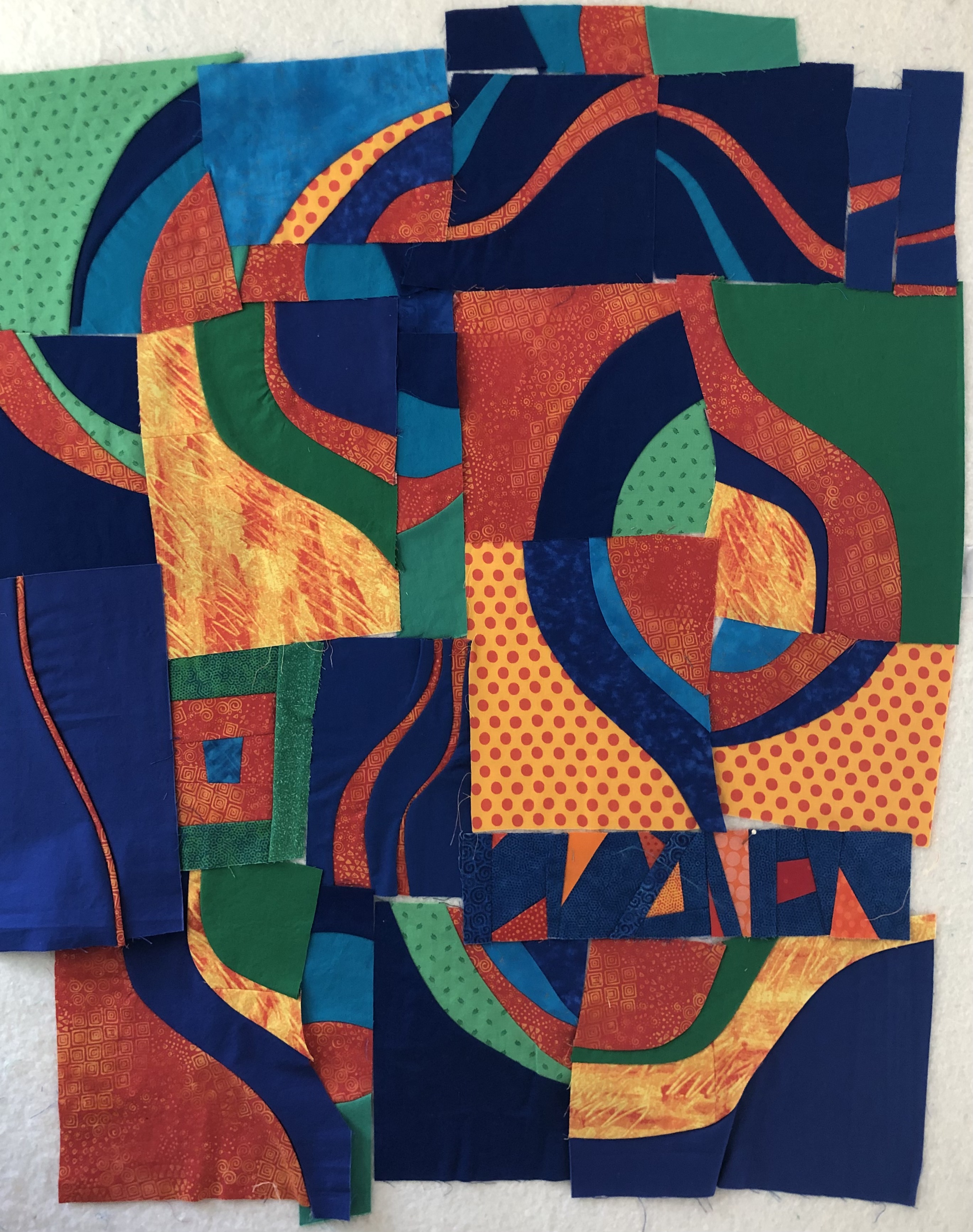
I’m working on two things at once. The other thing is 8 different layout options for Chunk of the Month-but I can’t share them util after Thursday when EBHQ has the meeting when we reveal Chunk #6. Here’s the quilt I can show you! I started some of these circular rectangle blocks while teaching the technique at Hello Stitch. Then there are pieces I made for both Lone Robins, and earlier leftovers that didn’t get used in whatever quilt I was working on. So, this is kind of a kitchen sink quilt, where I make the disparate pieces play well together.

I’ve been having fun, playing with the chunks! I think the first one looks like a string of beads. Here are two more options:
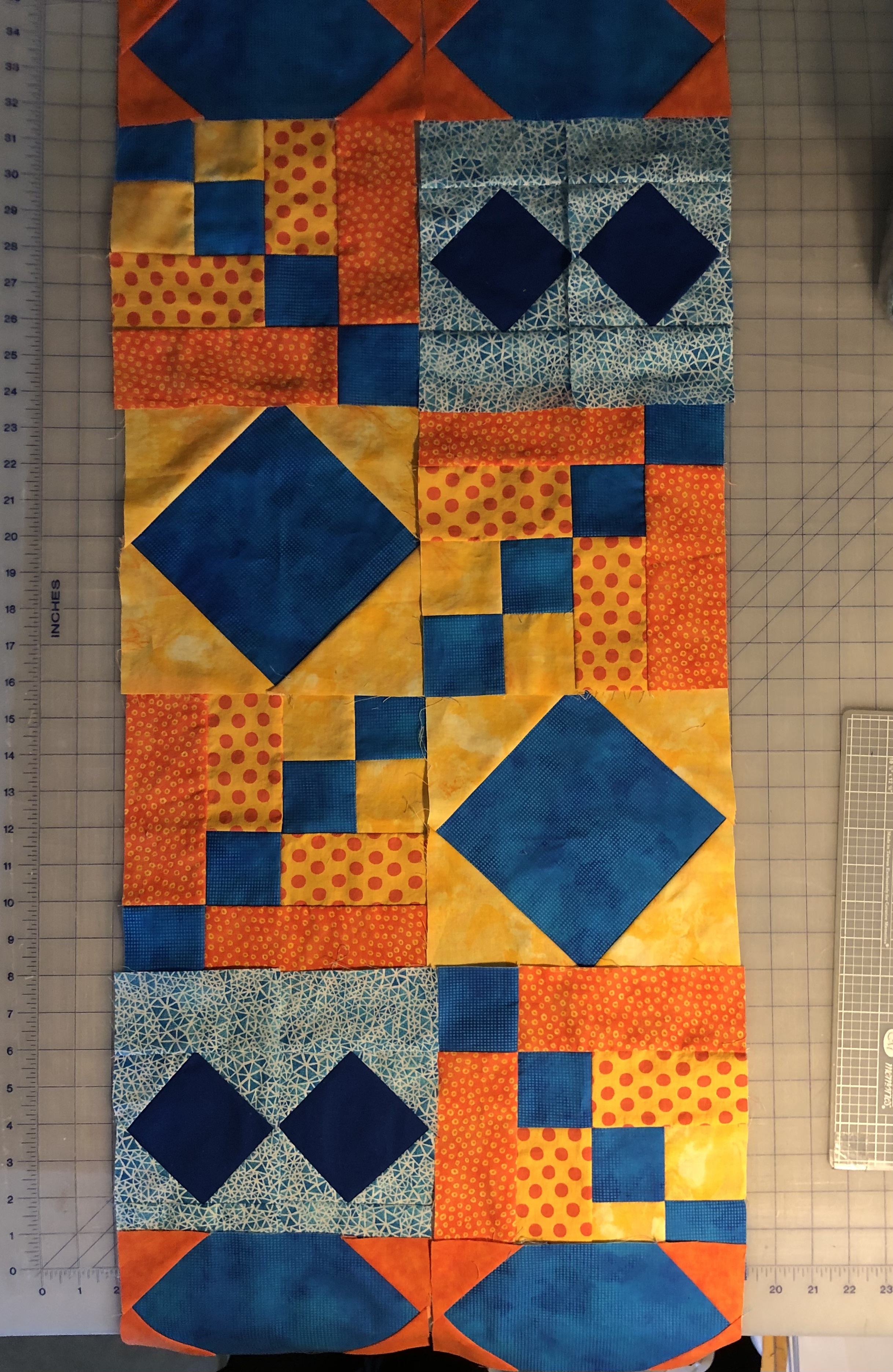
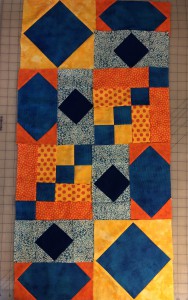 The middle one is my favorite! I like the diagonals!
When Julia first told me about Chunk of the Month, she was hoping I would do wonky versions, that would contrast with her more traditional ones. I did curved triangles for the first chunk, but none of the other chunks seemed to lend themselves to this treatment. I tried curved piecing for #5 but didn’t like the result. Here’s the process:

First, I cut curves.
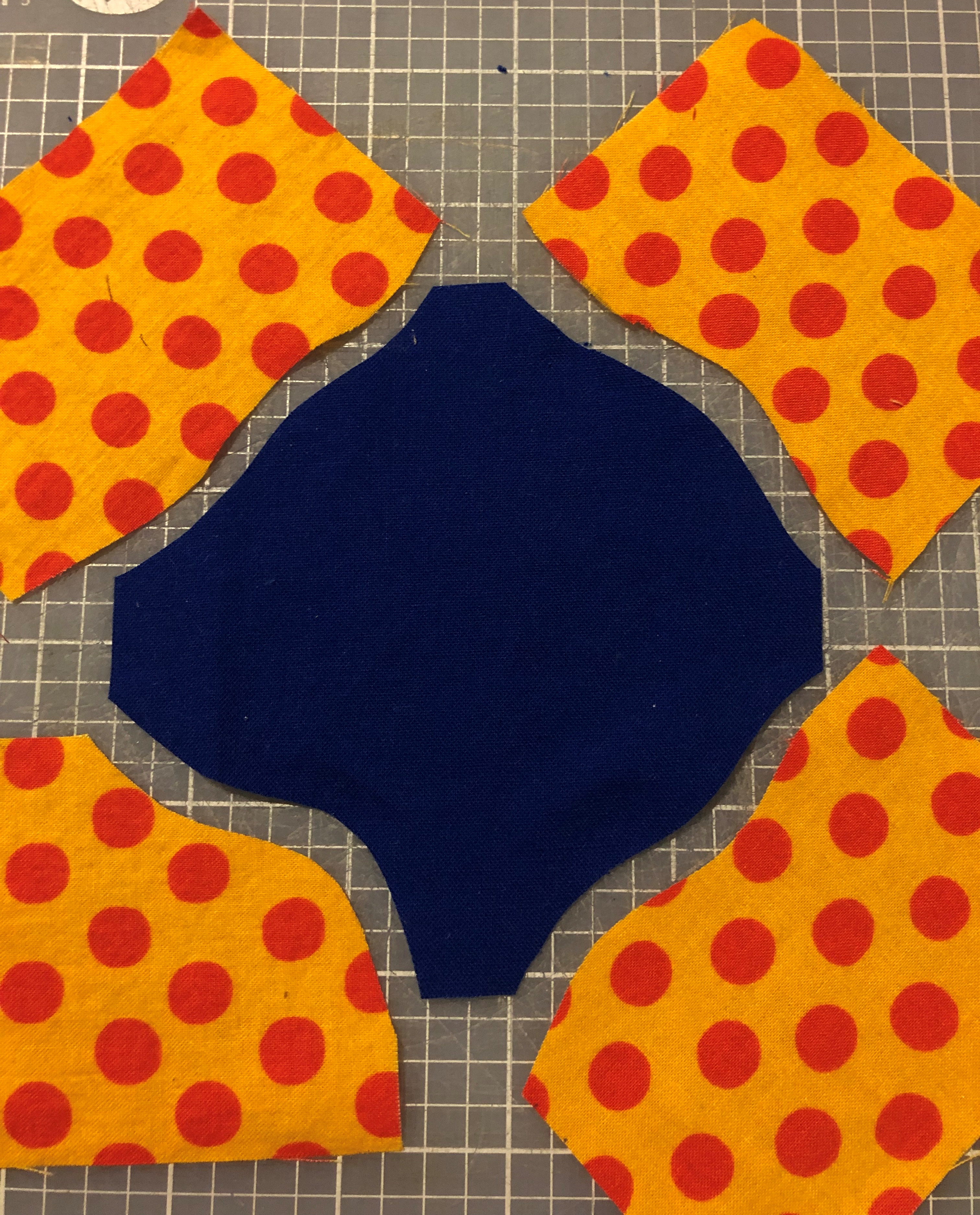
Then I cut the same curves into the second fabric. It’s important to cut both fabrics right sides up!

I sewed the pieces together and cut it down to size.
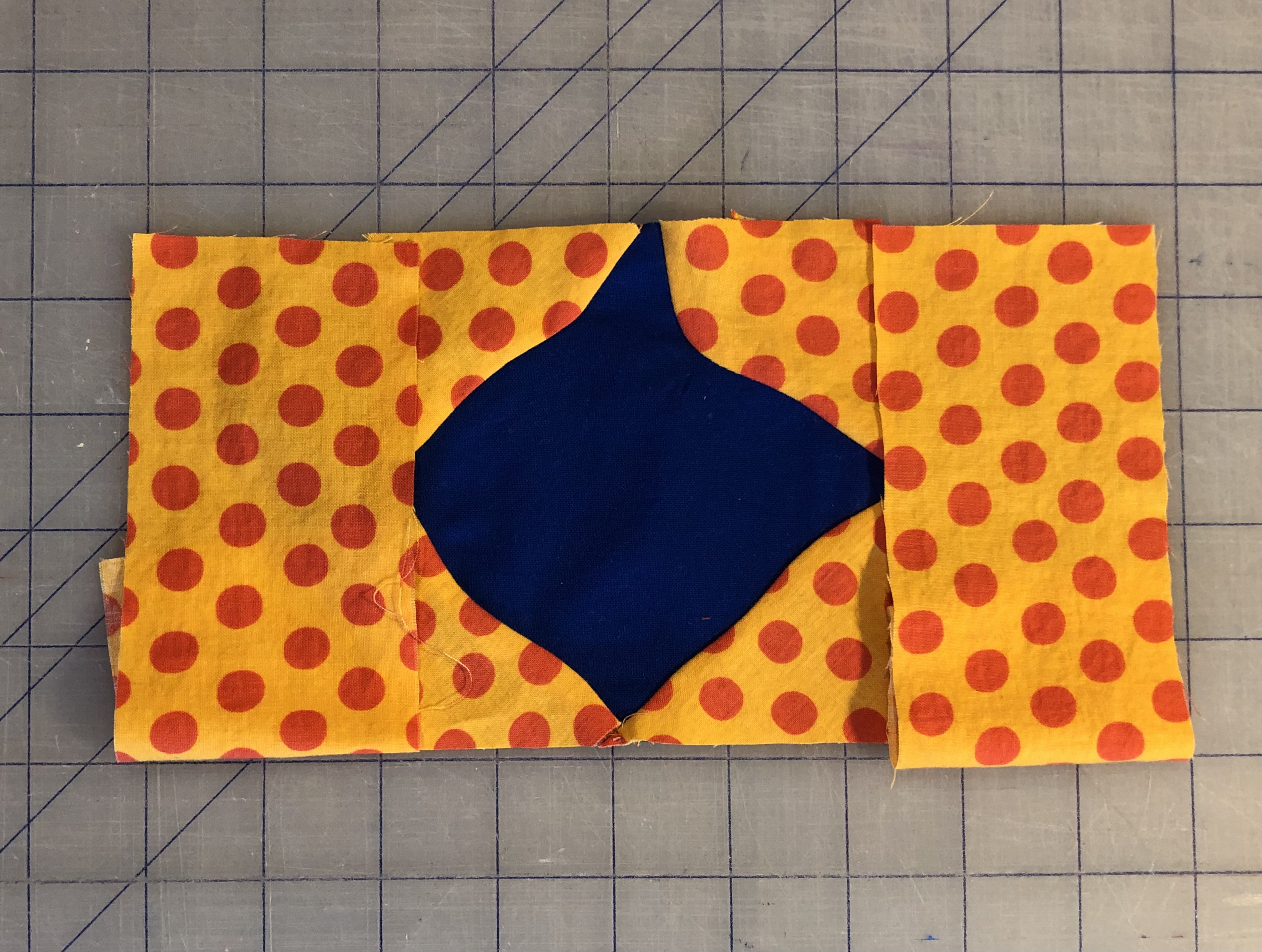
This is what Chunk #5 would look like. I didn’t like it. It wasn’t worth the effort to make it wonky. I decided to change colors as I haven’t used any light blue since the first chunk.
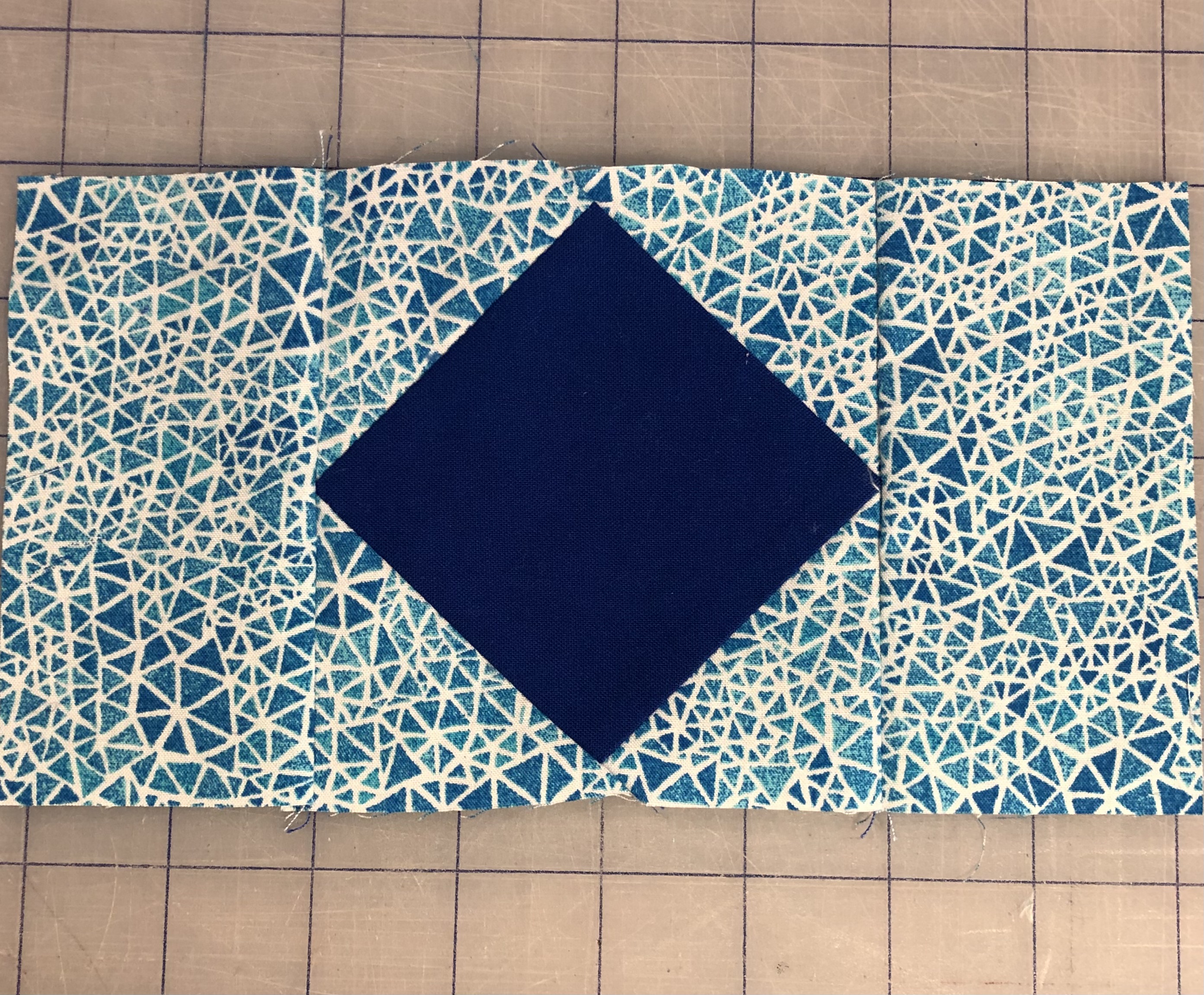
Now I just need to make 7 more of these!
I have now finished the 4th Chunk of the Month. Here are all four of this month’s chunks.
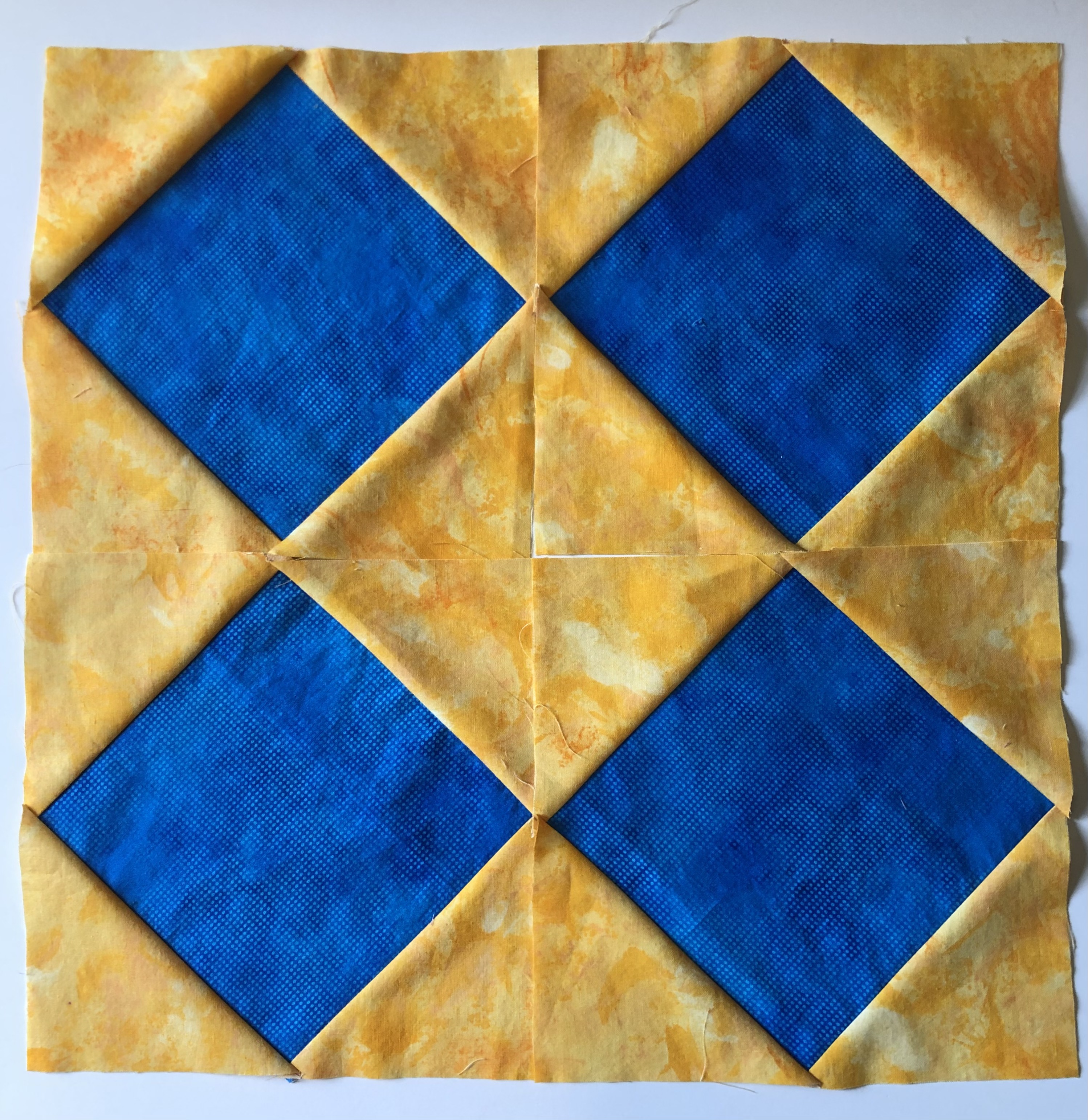
I played around with chunks #3 and #4, not sewing them together, but just exploring the possibilities.
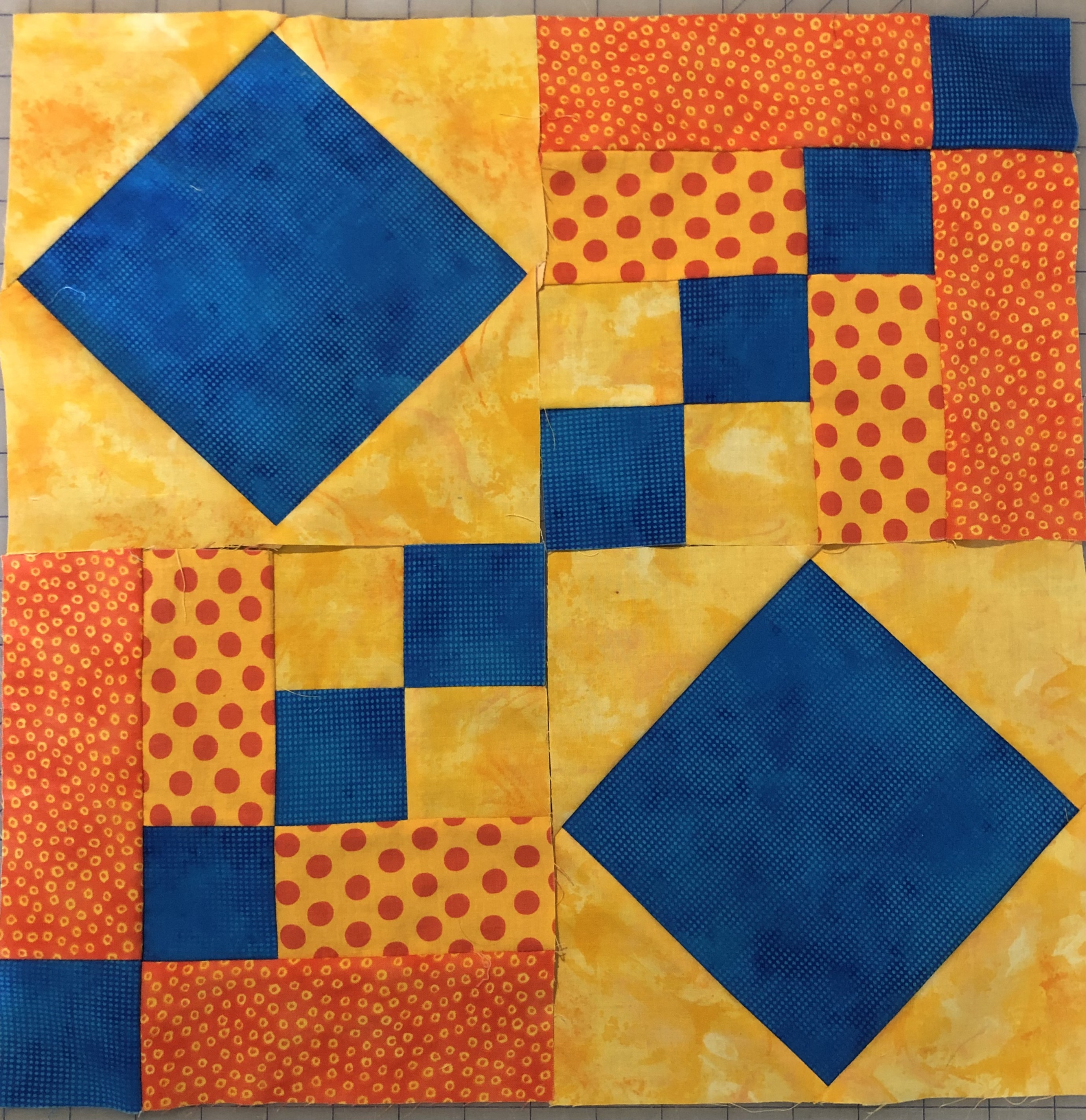
I really like this combination!
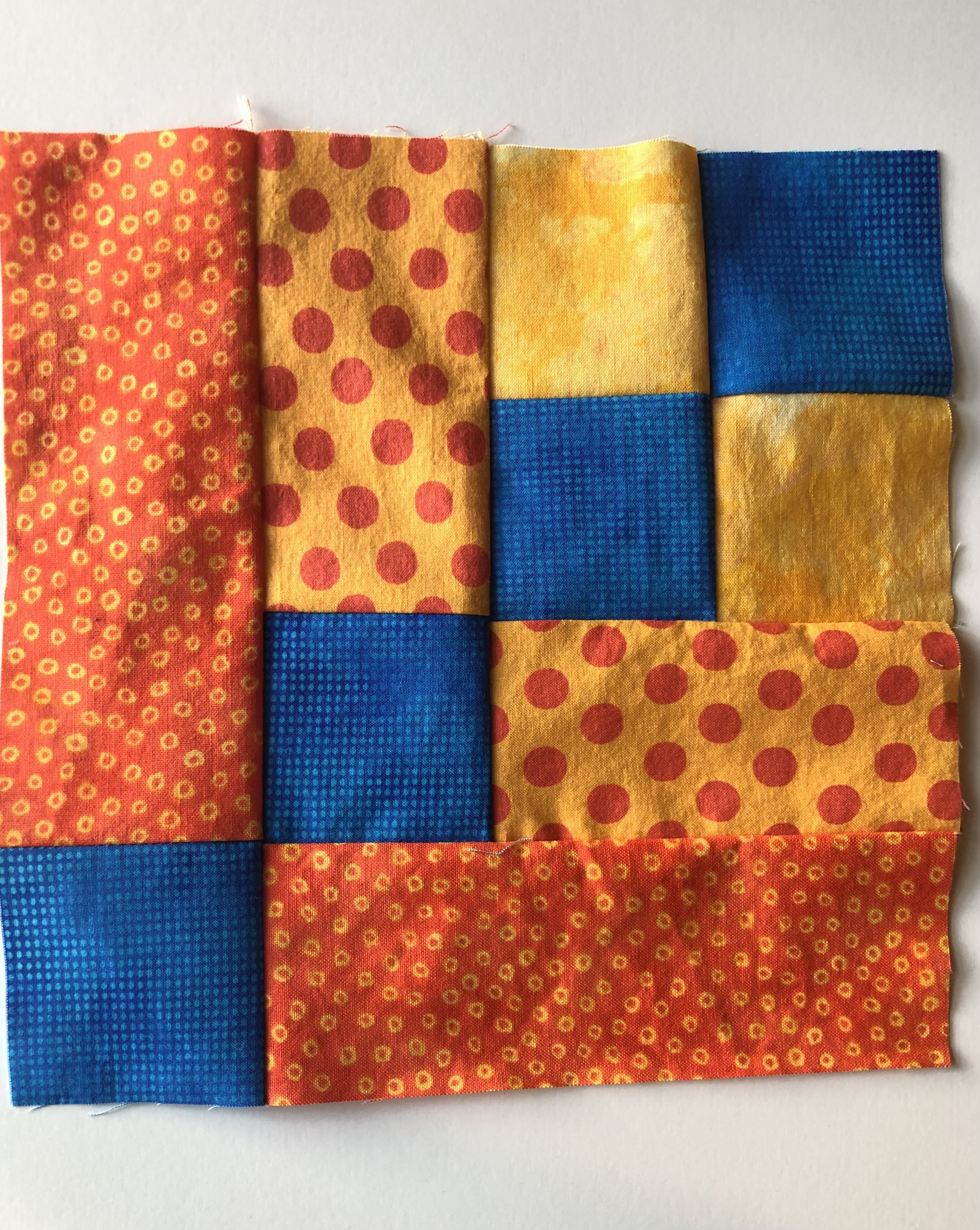
This is the third Chunk of the month. I made four of these blocks. In Julia’s example, all of the light fabric was the same white.
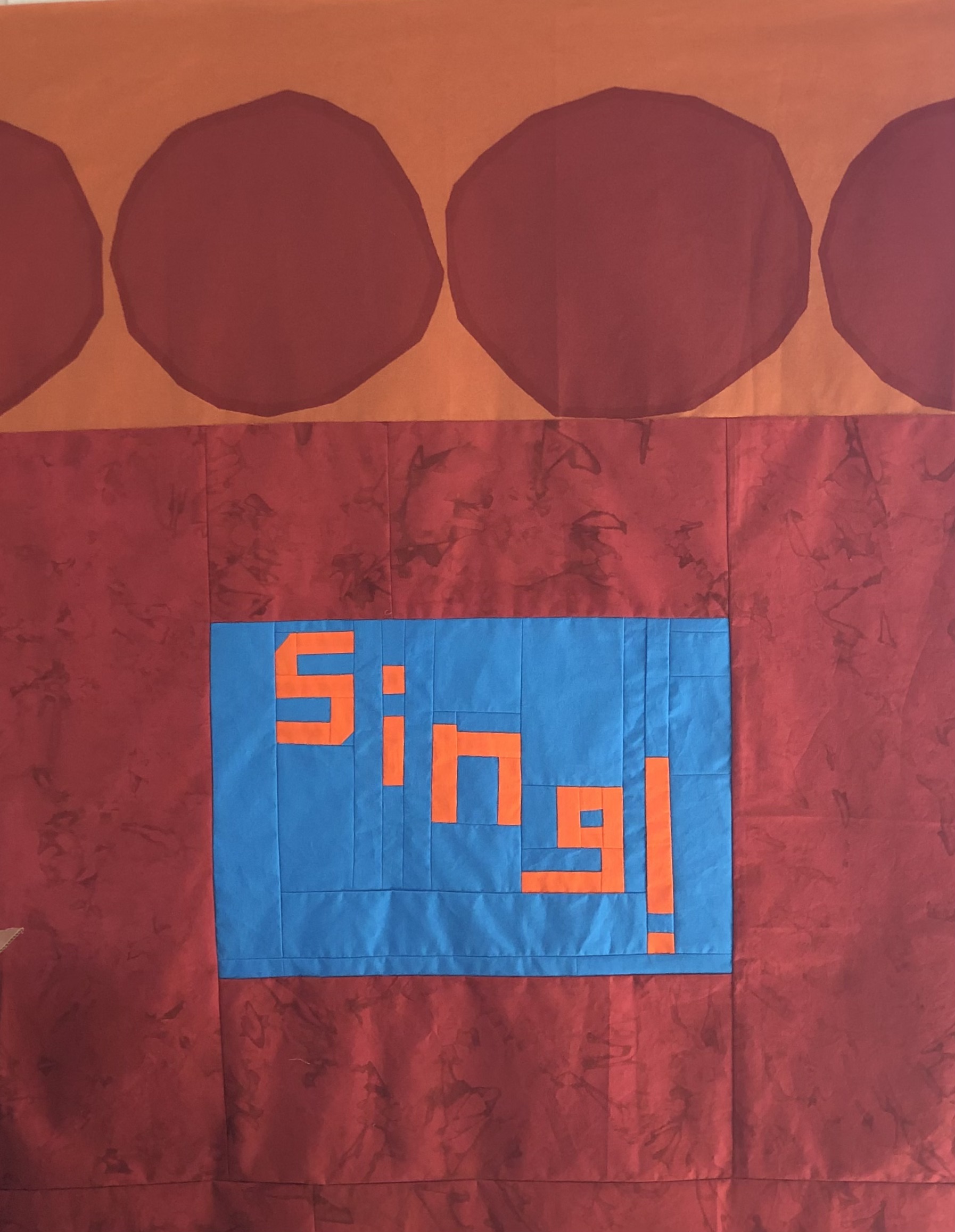
I decided to use the word sing as the back of my second lone robin quilt. I haven’t figured out the quilting yet, but I’ll make it up as I go along. Below is the front of this quilt.
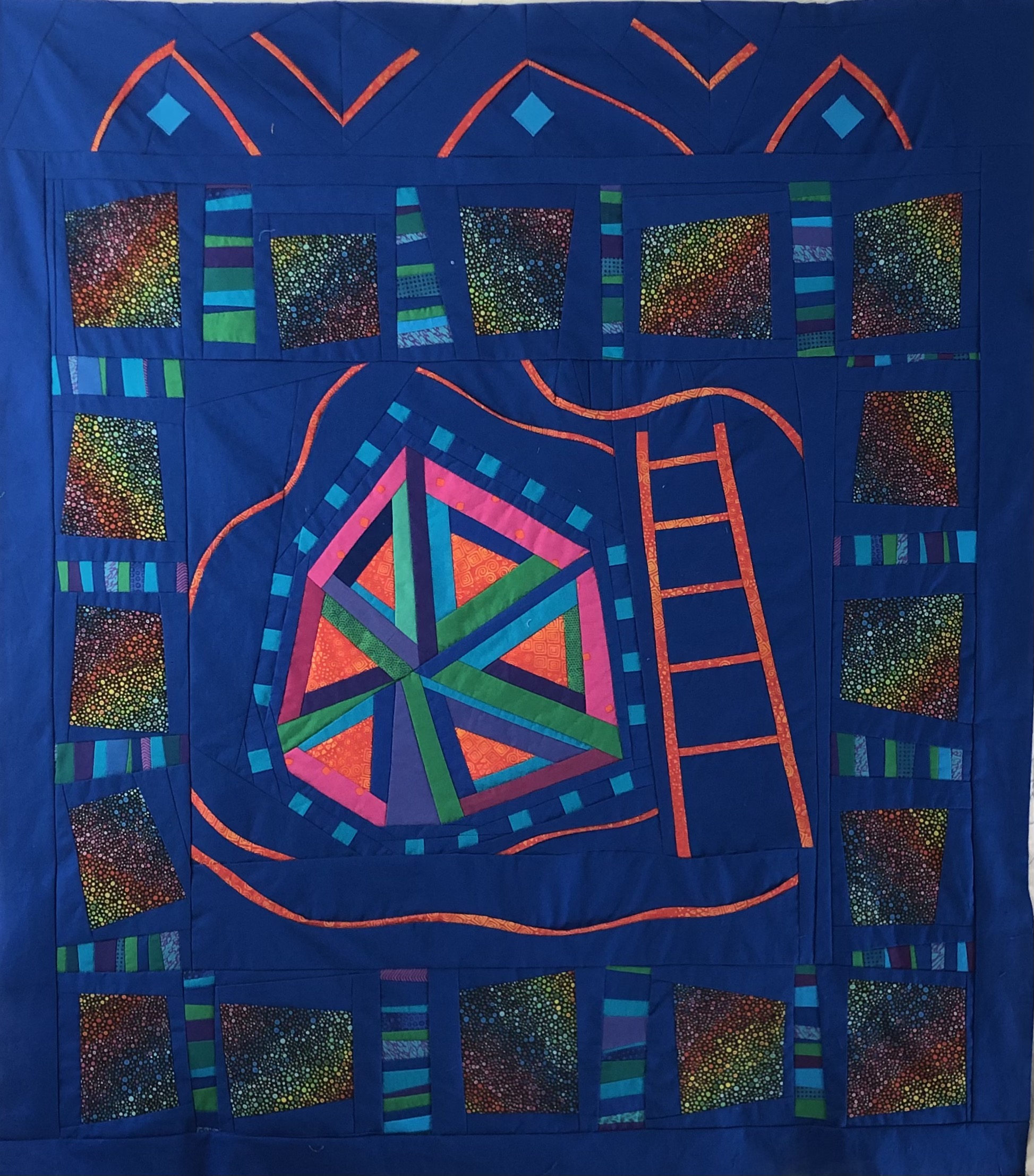
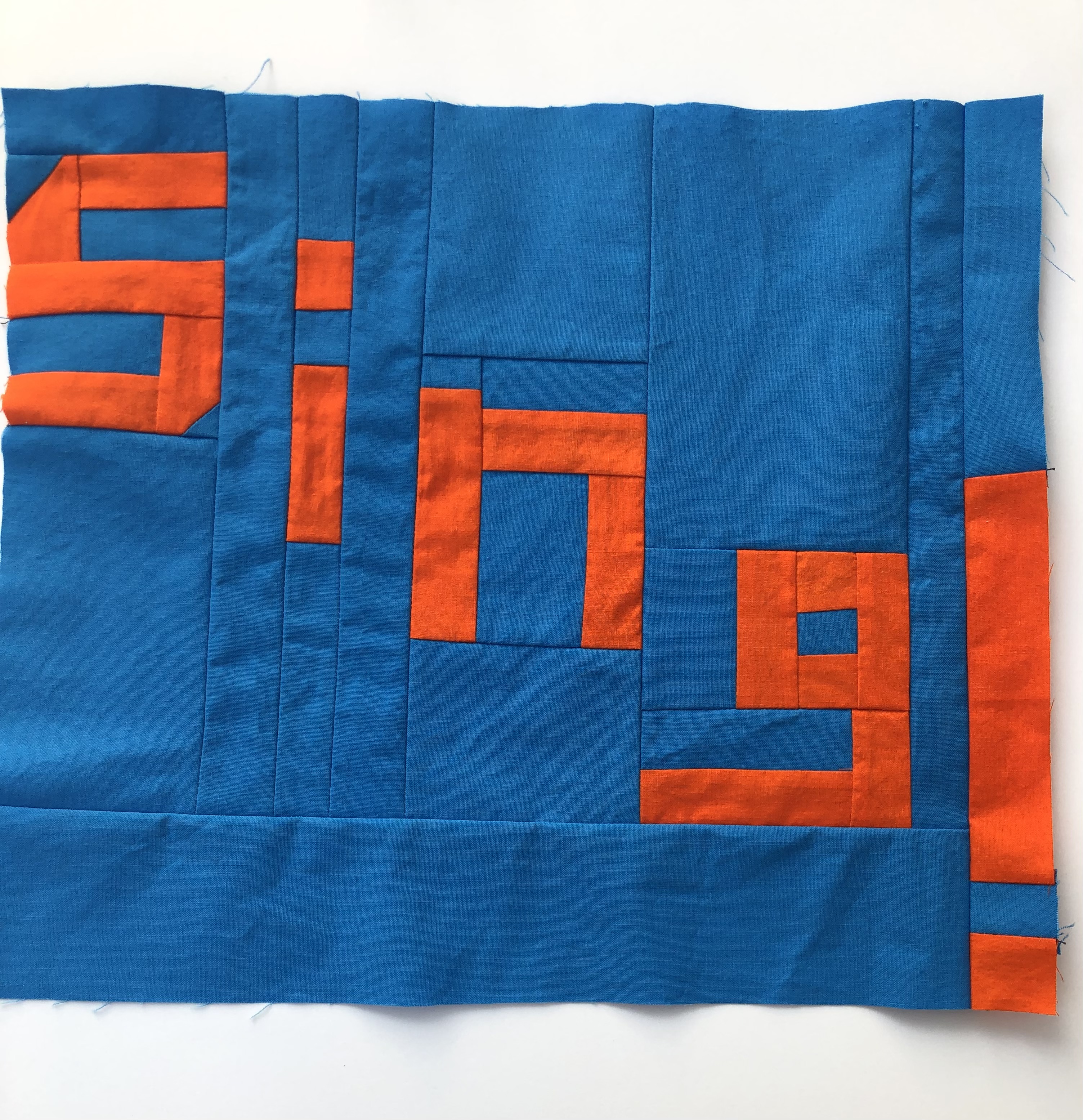
Today I was the Zoom host in Cheryl Arkinson’s EBHQ class on piecing letters and words into quilts. It took me most of the day to make this. Singing is what’s kept me sane though the pandemic! Well, maybe both singing and quilting!
